
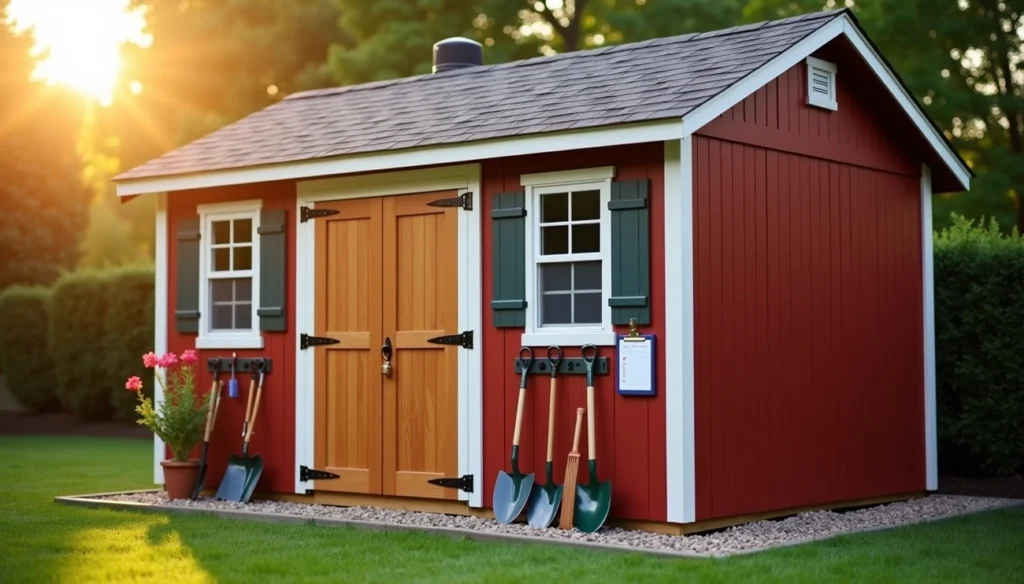
Building a shed from scratch requires careful planning and accurate material estimates. Whether you’re constructing a simple storage shed or a more elaborate workshop, knowing exactly how much lumber you need saves time, money, and frustrating mid-project trips to the hardware store.
🛠️ Shed Materials Calculator + Cost Estimator
Enter dimensions in feet. Edit unit costs (green fields) for instant total updates.
Why Accurate Material Calculations Matter
Ordering too little material delays your project and increases costs through multiple delivery fees or fuel expenses. Ordering too much leaves you with excess lumber that takes up space and ties up your budget. A precise material list ensures you purchase the right quantities of framing lumber, sheathing, and trim boards the first time.
Professional builders know that material waste typically runs between 5-10% on framing projects. Our calculator accounts for this waste factor while helping you understand exactly what goes into your shed’s structure.
Understanding Shed Framing Components
A typical wood-framed shed consists of several key structural elements. The floor frame includes joists, rim boards, and often a center beam for larger spans. Wall framing requires top plates, bottom plates, studs, and headers for door and window openings. The roof structure incorporates rafters or trusses, ridge boards, and collar ties depending on your design.
Each component serves a specific purpose. Floor joists support the shed’s weight and contents, spaced typically 16 inches on center for adequate strength. Wall studs transfer loads from the roof to the foundation, while top and bottom plates tie everything together. Roof framing supports sheathing and roofing materials while shedding water away from the structure.
Common Framing Lumber Dimensions
Most shed framing uses dimensional lumber in standard sizes. Floor joists are typically 2×6 or 2×8 boards, depending on span and load requirements. Wall studs are usually 2x4s for sheds under 10 feet tall, though 2x6s provide extra strength and insulation space for larger structures.
Roof rafters range from 2x4s for small sheds to 2x8s or larger for wider spans or heavy snow loads. Top and bottom plates use the same dimension as your wall studs, while rim boards match your joist size.
Calculating Your Material Needs
Start by determining your shed’s dimensions and desired door or window openings. The floor frame calculation considers joist spacing, rim boards, and blocking. Add your shed’s perimeter for rim boards, then calculate joist quantities based on your chosen spacing.
For walls, count the number of studs by dividing wall length by your spacing interval and adding extras for corners and openings. Don’t forget doubled studs beside doors and windows, plus headers above openings. Each wall needs top and bottom plates running its full length.
Roof calculations depend on your chosen style. Gable roofs require rafters running from wall top to ridge, while shed roofs use rafters spanning the full width. Factor in rafter spacing, overhang length, and ridge board requirements.
Sheathing and Additional Materials
Beyond framing lumber, you’ll need sheathing for floors, walls, and roofs. Floor sheathing typically uses 3/4-inch tongue-and-groove plywood or OSB. Wall sheathing adds structural strength and uses 7/16-inch or 1/2-inch OSB panels. Roof sheathing requires 1/2-inch or 5/8-inch plywood or OSB rated for roof applications.
Calculate sheathing by determining total square footage for each surface, then dividing by panel size (typically 32 square feet per 4×8 sheet). Add 10% waste for cuts and errors.
Accounting for Waste and Errors
Even experienced builders encounter waste from cuts, mistakes, and damaged materials. Framing lumber waste typically runs 5-8%, while sheet goods generate 10-15% waste due to cutting requirements. Our calculator incorporates these factors to ensure you have adequate materials.
Some waste is unavoidable—a 12-foot board cut into three 4-foot pieces uses the material efficiently, but needing 4-foot-3-inch pieces creates significant waste. Planning your cuts carefully minimizes this issue.
Regional Considerations and Building Codes
Local building codes significantly impact material requirements. Snow load ratings affect roof framing size and spacing. Wind zones may require additional fasteners or structural sheathing. Some areas mandate specific foundation types that influence floor framing.
Check with your local building department before finalizing plans. Many jurisdictions require permits for sheds exceeding certain sizes, and inspectors will verify your framing meets code requirements.
Using Your Material List Effectively
Once you have your complete material list, organize it by lumber dimension and length. This makes ordering easier and helps you visualize the project scope. Many lumber yards offer contractor pricing for larger orders, so buying everything at once often saves money.
Consider delivery timing too. Having all materials delivered simultaneously risks weather damage and requires substantial storage space. Staging deliveries so materials arrive as needed keeps your workspace organized.
Cost Estimation Tips
Lumber prices fluctuate seasonally and with market conditions. Get quotes from multiple suppliers, as prices vary significantly. Big box stores offer convenience, while specialty lumber yards often provide better quality and competitive pricing for large orders.
Don’t forget fasteners, hardware, and concrete for your foundation. These costs add up quickly. Budget approximately 15-20% of your lumber costs for these additional materials.