
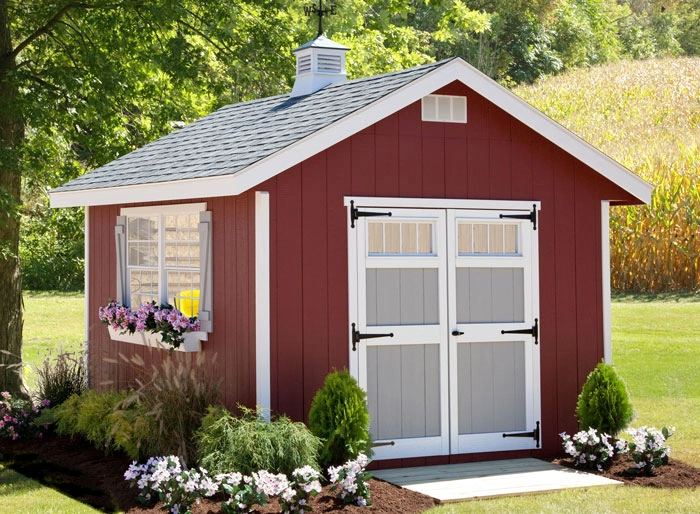
Your shed doesn’t get opened every day, which is exactly what makes it appealing to almost everything you don’t want living in your backyard. It’s dark, it’s quiet, it’s full of soft nesting materials like cardboard boxes and folded tarps, and nobody’s around to bother whoever moves in. By the time most homeowners notice a pest problem in the shed, it’s already established — chewed-through bags of grass seed, a wasp nest wedged in the rafters, or mouse droppings scattered across the workbench.
The good news is that shed pest problems are almost entirely preventable, and the fixes are different depending on what you’re storing and what your shed is built from. Here’s how to keep your shed a storage space instead of a wildlife sanctuary.
Rodents: The #1 Shed Invader
Mice and rats are drawn to sheds for two reasons: shelter and food. Even if you’re not storing anything edible, birdseed, pet food, fertilizer, and grass seed bags are all rodent magnets, and shredded cardboard or insulation makes ideal nesting material.
Prevention:
- Store any bagged seed, feed, or fertilizer in sealed hard plastic or metal bins, not their original paper or thin plastic bags.
- Seal gaps around the base of the shed, especially where it meets the foundation or skids — a mouse can squeeze through a gap the size of a dime.
- Use steel wool or copper mesh (not standard caulk alone) to plug small entry points, since rodents can chew through caulk and expanding foam.
- Keep a few feet of clearance between the shed and tall grass, brush piles, or firewood stacks, which give rodents cover to approach unseen.
If they’re already in: snap traps or enclosed bait stations placed along the walls (rodents travel along edges, not through open floor space) are far more effective than traps placed in the middle of the shed.
Wasps, Hornets, and Bees
Shed eaves, roof overhangs, and rafters are prime real estate for wasps and hornets looking for a sheltered spot to build a nest. Because sheds often go unopened for stretches at a time, a nest can grow from a golf-ball-sized start to a serious problem before anyone notices.
Prevention:
- Check eaves, corners, and the underside of any shelving every few weeks during spring and early summer, when nests are just getting started and easiest to remove.
- Keep doors and windows closed when not actively in use, especially in early spring when queens are scouting nesting sites.
- Install a fine mesh screen over any roof vents or gable vents, since these are a favorite nesting entry point.
If a nest is already established: small, early-stage nests (roughly golf-ball size) can often be knocked down safely in the early morning or evening when wasps are least active, using a wasp-specific aerosol spray from a safe distance. Anything larger, or nests built into a wall cavity, is worth calling a pest control professional for — the risk of a swarm response goes up significantly once a nest is mature.
Termites and Carpenter Ants
This is where your shed’s building material matters more than anything else. Wood sheds sitting directly on soil, or built without a raised foundation, are especially vulnerable, since both termites and carpenter ants are drawn to wood that stays damp or sits in ground contact.
Prevention:
- Keep the shed elevated on a raised foundation, skids, or concrete blocks rather than placing it directly on soil or grass.
- Treat exposed wood surfaces with a wood preservative, and reapply every couple of years depending on your climate.
- Store firewood away from the shed itself — a woodpile leaning against the shed wall is one of the most common ways termites and carpenter ants find their way in.
- Watch for small piles of what looks like sawdust near baseboards or wall joints; that’s often frass from carpenter ants or termite activity, not actual sawdust from a project.
Metal and resin/plastic sheds sidestep this problem almost entirely, since there’s no wood for termites or carpenter ants to feed on — one of the more underrated arguments for going that route if pest pressure in your area is high.
Spiders
Spiders themselves usually aren’t destructive, but a heavy spider population is often a sign that a shed has plenty of other insects to eat — which means addressing spiders often means addressing whatever’s actually drawing them in.
Prevention:
- Reduce clutter, since piles of boxes and unused items give spiders (and their prey) plenty of places to hide undisturbed.
- Sweep out corners and rafters every few months to disrupt web-building before it gets established.
- Seal exterior gaps the same way you would for rodents — fewer entry points for insects means fewer spiders following the food.
A Simple Seasonal Habit That Prevents Most of This
Most shed pest problems trace back to the same root cause: the shed goes unopened and unchecked for weeks or months at a time. A quick 10-minute walkthrough once a season — checking eaves for early nests, corners for droppings or frass, and the foundation line for new gaps — catches almost everything above while it’s still small and easy to handle. It’s a lot easier to knock down a golf-ball-sized wasp nest or block one new gap in the siding than to deal with an established colony of any kind six months later.
The Bottom Line
A shed left alone is an open invitation, but a shed that’s sealed, elevated, decluttered, and checked a few times a year rarely becomes a pest problem at all. The specific risks shift depending on whether you’re dealing with a wood, metal, or resin structure, so it’s worth thinking about pest exposure as part of the material decision — not just an afterthought once the shed’s already built.