
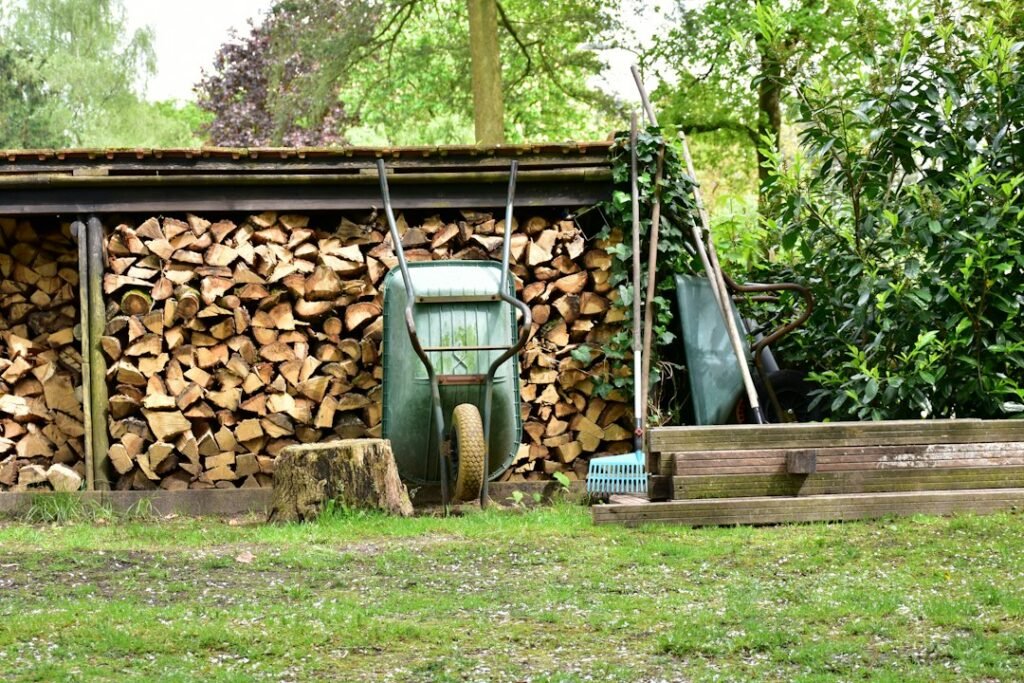
Heating season is here, and if your firewood is sitting under a tarp or stacked against the house, a firewood shed is one of the most practical small builds you can make this fall. A good woodshed does two jobs: it keeps rain and snow off the wood, and it lets air move freely through the stack so the wood keeps drying. Get both right and your wood lights easier, burns hotter, and leaves less creosote in your chimney.
This guide covers how to size a firewood shed by the cord, the design details that make wood season properly, and what it costs to build or buy one.
Key Takeaways
- A firewood shed is not a storage shed. It needs open or slatted sides for airflow, not solid walls.
- Size it by the cord. A full cord is 128 cubic feet of stacked wood, roughly a 4 × 4 × 8-foot stack.
- Get the wood off the ground. A raised, slatted floor or gravel base stops rot and wicking.
- Dry wood burns best. Aim for under 20% moisture, which usually takes at least 6 months of seasoning, and often longer for dense hardwoods.
- Most DIY woodsheds cost a few hundred to a couple thousand dollars, depending on size and materials.
Why a Firewood Shed Beats a Tarp
A tarp keeps rain off, but it also traps moisture against the wood, especially if it’s wrapped tight around the sides. The result is wood that stays damp, grows mold, and never fully seasons. A woodshed with a solid roof and open sides gives you the best of both: water stays off the top, and wind and sun keep drying the stack.
Burning wet wood wastes energy boiling off water, produces more smoke, and builds up creosote in your chimney faster. The EPA’s Burn Wise program recommends burning wood with moisture content below 20%, and a well-designed shed is the easiest way to get there and stay there.
How Big Should Your Firewood Shed Be?
Start with how much wood you burn in a winter. A home that uses a wood stove as the main heat source may burn 3 to 6 cords or more, while occasional fireplace use might take less than one. Ideally, your shed holds a full season of dry wood plus room for next year’s wood to start seasoning.
Firewood measurement basics
- Full cord: 128 cubic feet of neatly stacked wood, typically 4 feet high, 4 feet deep, and 8 feet long.
- Face cord (or rick): One row 4 feet high and 8 feet long, as deep as the pieces are cut, often about 16 inches. That’s roughly one-third of a full cord, though it varies with piece length.
Approximate shed capacity
| Footprint | Stack Height | Approximate Usable Capacity | Good For |
|---|---|---|---|
| 4 × 8 ft | 5 ft | About 1 cord | Fireplace use, kindling and backup supply |
| 6 × 10 ft | 6 ft | About 2 to 2.5 cords | Regular weekend fires, supplemental stove heat |
| 8 × 12 ft | 6 ft | About 3.5 cords | Primary stove heat in a moderate climate |
| 8 × 16 ft | 6 ft | About 4.5 to 5 cords | Primary heat, or a two-year rotation |
Capacity estimates allow roughly 20% for airflow gaps between rows and walking room. Your actual capacity depends on piece length and how tightly you stack.
Tip: Consider a two-bay design: one bay for wood that’s ready to burn this winter and one for green wood seasoning for next year. You’ll always burn the driest wood first.
Design Details That Make or Break a Woodshed
1. Open or slatted sides
Leave the front fully open and use spaced boards or lattice on the sides and back. Gaps of an inch or more between boards let air move through while still blocking some wind-driven rain. Avoid fully enclosed walls; they turn a woodshed into a damp storage closet.
2. A raised floor
Never stack firewood directly on soil. Ground contact wicks moisture up into the bottom rows and invites rot and insects. Options include a slatted floor of pressure-treated lumber on skids or blocks, pallets on compacted gravel, or a gravel pad with treated sleepers. Our guide to choosing the best shed foundation covers the pros and cons of each base.
3. A roof with real overhang
A simple single-slope (lean-to) roof is the most common choice: easy to build and it sheds water away from the open front. Extend the overhang at least 12 to 18 inches on the open side so rain doesn’t blow onto the stack. Metal roofing is durable, cheap, and quick to install. If you’ve never framed a single-slope roof, our lean-to shed weekend build guide walks through the same basic structure.
4. Orientation and placement
- Face the open side away from prevailing winds and storms so rain doesn’t drive into the stack.
- Give it sun and breeze. A sunny, open spot dries wood much faster than a shady corner under trees.
- Keep it a reasonable distance from the house. Woodpiles attract insects and rodents, and a shed right against your siding gives them easy access. Many experts suggest keeping firewood well away from the home, then using a small rack by the door for a few days’ supply. Our shed placement guide covers sun, drainage, and access in more detail.
- Think about winter access. You’ll be walking to it in snow and darkness. A clear, level path and a spot reachable with a wheelbarrow or sled make a big difference.
5. Stacking for airflow
- Stack bark-side up on the top row to help shed any water that gets in.
- Leave a few inches between rows and between the stack and the back wall.
- Split wood before seasoning; split pieces dry much faster than rounds.
- Crisscross the ends of each row (or use end posts) to keep stacks stable.
How Long Does Firewood Take to Season?
Most firewood needs at least six months of drying after it’s split and stacked, and dense hardwoods like oak often take a year or more. Softer woods and thinner splits dry faster. The only way to know for sure is to check: an inexpensive moisture meter on a freshly split face should read below 20% before you burn it. Seasoned wood also tends to be lighter, show cracks on the ends, and make a hollow sound when two pieces are knocked together.
That timeline is why it pays to build your woodshed now. Wood you split and stack this fall will be ready for next winter, and a two-bay shed keeps that rotation going year after year.
What Does a Firewood Shed Cost?
Costs vary by size, materials, and local lumber prices, but here are typical ballpark ranges:
| Option | Typical Cost | Notes |
|---|---|---|
| Metal firewood rack with cover | $75–$300 | Holds a face cord or less; good for a porch supply |
| DIY small woodshed (4 × 8) | $300–$800 | Pressure-treated frame, metal or shingle roof |
| DIY mid-size woodshed (8 × 12) | $800–$2,500 | Depends heavily on lumber prices and roofing choice |
| Prebuilt or kit woodshed | $500–$4,000+ | Delivery and site prep often extra |
| Contractor-built woodshed | $2,000–$6,000+ | Larger sizes, custom designs, or matching your house |
To estimate your own build, try our wood shed framing and material calculator for a lumber list, or get an overall estimate with our shed cost calculator.
Ways to keep costs down
- Use a lean-to design attached to an existing fence or outbuilding (not your house).
- Reuse pallets for the floor, as long as they’re heat-treated (stamped “HT”) rather than chemically treated.
- Choose corrugated metal roofing, which is often cheaper and faster than shingles for an open structure.
- Skip siding on the sides entirely if your site isn’t exposed to driving rain.
Do You Need a Permit for a Firewood Shed?
Often not, since many woodsheds are small, open-sided accessory structures. But rules vary by town: size limits, setbacks from property lines, and HOA restrictions can all apply. Check before you build. Our guide to whether you need a permit to build a shed explains how to find your local rules quickly.
Common Firewood Shed Mistakes
- Building it too small. Most people underestimate how much space a few cords take. Size for a full season plus next year’s seasoning wood.
- Enclosing the sides. Solid walls trap moisture. Airflow is the point.
- Stacking on the ground. The bottom row rots and pulls moisture into the rest of the stack.
- Short roof overhangs. Wind-driven rain soaks the front of the stack.
- Putting it right against the house. It invites pests and makes a fire hazard worse. If pests are already a problem, see our guide to pest-proofing your shed.
The Bottom Line
A firewood shed is one of the simplest and most useful outbuildings you can add. Size it by the cord, keep the wood off the ground, give it a roof with generous overhang, and leave the sides open to the breeze. Build it this fall, and the wood you stack now will be dry, clean-burning fuel by next winter.
Join the Conversation
How much firewood do you burn each winter, and what does your woodshed look like? Share your setup in the comments below.